
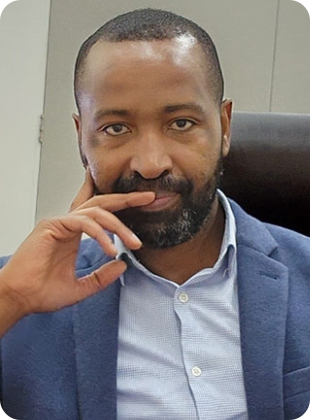
Dr Fidele Tugizimana
MSA President
Fidele Tugizimana holds a Ph.D. and M.Sc. in Biochemistry from the University of Johannesburg (UJ) and is currently pursuing an MBA with a Digital Transformation focus, at the Johannesburg Business School (JBS). His extensive academic background includes a B.Sc. in Biochemistry-Chemistry, a B.Phil. in Philosophy (Urbaniana University, Italy), and specialized training in metabolomics, metabolic and flux modeling, and advanced mathematics from global institutions (EMBO, Cambridge, UK; Wageningen University, Netherlands).
He is a specialist scientist in International R&D Management at Omnia Group Ltd, Director of the Research Centre for Plant Metabolomics at UJ, and a Visiting Professor at the University of Messina, Italy. He leads The Tugizimana Lab (https://thetugizimanalab.co.za/), in the Department of Biochemistry (UJ), mentoring over 25 researchers (MSc, PhD and Postdoctoral research fellows), and has been recognized among the top 2% scientists globally (Elsevier-Stanford, 2024 and 2025). Fidele Tugizimana pioneers AI-driven metabolomics methodologies for drug discovery, plant biostimulant research, microbiome, and infectious diseases. He has published over 80 peer-reviewed papers (including in Nature journals) with a google scholar h-index of 35.
As current President of Metabolomics South Africa (MSA) and former Board Director of the International Metabolomics Society (IMS), and serving on different scientific committees and editorial boards, Fidele Tugizimana is a global leader in advancing metabolomics research and innovation, for societal impact. He is committed to advancement of metabolomics and its applications in Africa and for Africa, global collaborations, community-driven initiatives, equity and impact-driven science and technology.
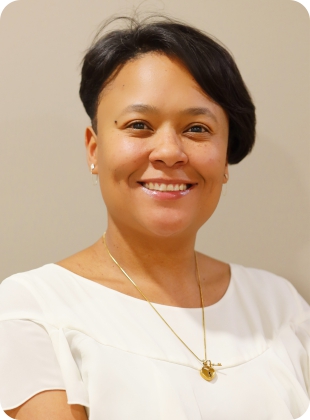
Prof Aurelia Williams
MSA Vice President
Aurelia A. Williams is an Associate Professor in the Biochemistry Department at North-West University (NWU), South Africa, and a researcher in the Biomedical and Molecular Metabolism Research Group (BioMMet). Her research focuses on elucidating the interplay between metabolism, immune responses, and genetic factors in the pathogenesis of infectious and acquired diseases, particularly HIV/AIDS and its associated comorbidities.
Dr. Williams earned her MSc from the University of Johannesburg and her PhD in Biochemistry from the University of Pretoria. She further expanded her expertise in molecular and metabolic research through postdoctoral training at the University of California, San Francisco.
She currently serves on the Board of Directors of the International Metabolomics Society where she is also Chair and a member of the Society’s Conferencing and membership committees, respectively. An active leader in South Africa’s scientific community, Dr. Williams is also the Deputy President of Metabolomics South Africa (MSA), which she co-founded to promote metabolomics research and collaboration. She chairs MSA’s Training and Conference Committee and previously served as Deputy Secretary (2018–2020). Dr. Williams is also a facilitator for the Technological Higher Education Network South Africa (THENSA) under the Department of Science and Innovation, and a member of several scientific societies.
Committed to mentorship, equity, and community impact, Dr. Williams supports the next generation of scientists through student supervision, outreach initiatives, and advocacy for women in science. She serves as a reviewer and examiner for journals, institutions, and funding bodies. Dr. Williams contributes to ethical health research through her service on Aurum’s Community Advisory Board, ensuring that research reflects community values and context.
Internationally recognized for her work, Dr. Williams has published widely, presented at numerous conferences, and received several accolades. Her work bridges laboratory science and real-world impact—advancing health research while fostering inclusive scientific progress across Africa and beyond.
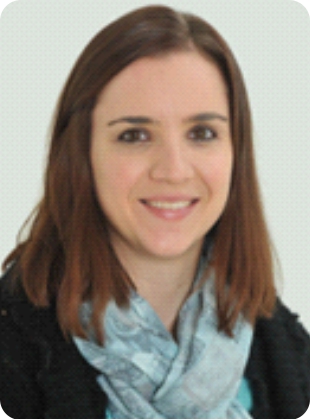
Prof Laneke Luies
MSA Secretary
Laneke Luies is an Associate Professor in the Biochemistry Department at North-West University (NWU), South Africa, and a researcher within the Biomedical and Molecular Metabolism Research Group (BioMMet). Her research applies metabolomics to investigate TB and HIV, aiming to uncover novel biochemical mechanisms that improve understanding of these diseases and their complex host–pathogen interactions. Her work explores metabolic adaptations in mono- and co-infections, as well as mechanisms underlying anti-TB treatment failure, response to antiretroviral therapy, and sex-based metabolic differences. Prof. Luies obtained her PhD in Biochemistry from the NWU, where her doctoral research—“Characterising tuberculosis and treatment failure thereof using metabolomics”—provided new insights into metabolic alterations associated with TB pathophysiology and therapeutic response. She later broadened her expertise through a postdoctoral fellowship at the University of Cape Town, further strengthening her focus on infectious disease research. She currently contributes to the international metabolomics community as a member of the Website and Communications Committee of the International Metabolomics Society, and serves on the Board of Directors of Metabolomics South Africa (MSA), an organisation dedicated to advancing metabolomics research capacity and collaboration across the country. Prof. Luies has published extensively in high-impact, peer-reviewed international journals and actively supervises postgraduate students at MSc and PhD levels. Her commitment to mentorship and scientific advancement continues to foster the growth of young researchers in biochemistry and metabolomics, contributing to both national and global health research initiatives.
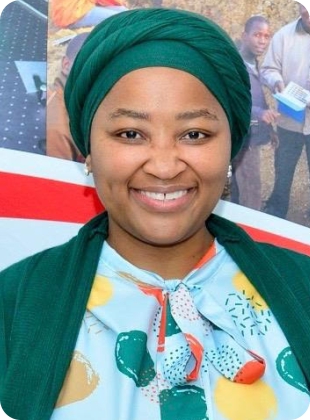
Dr Lungile Sitole
MSA Treasury
Lungile Sitole is Senior Lecturer in the Department of Integrative Biomedical Sciences (IBMS) at The University of Cape Town (UCT), South Africa. Her research is focused on using metabolomics to investigate how anticancer drugs and combination therapies alter cancer cell metabolism, with the goal of understanding drug responses and improving treatment strategies. Dr. Sitole holds both a Bachelors (Magna Cum Laude) and Master’s (Cum Laude) degree in Organic Chemistry from Jackson State University (MS, USA) as well as a PhD in Biochemistry from the University of Pretoria and a Master of Public Health (MPH) from the University of Johannesburg. Dr. Sitole is the current treasurer for the Metabolomics South Africa (MSA), which is an affiliate to the International Metabolomics Society, where she also serves on the membership committee. Dr. Sitole also serves as a mentor and programme Director for the STEM MentHER programme.
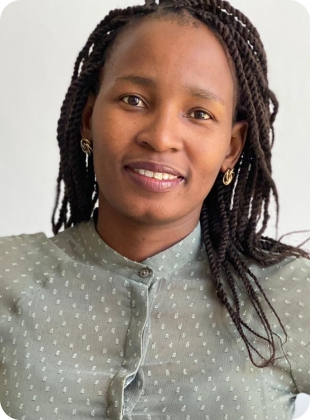
Dr Mokgadi Hlongwane
MSA Treasury
Dr Mokgadi Hlongwane is a lecturer and a work-integrated learning coordinator at the Department of Chemistry, Tshwane University of Technology, where she obtained her PhD in Science (Chemistry). She completed her BTech and MTech degrees in Chemistry, both with cum laude, showcasing her dedication and academic excellence. She harnesses a multidisciplinary research approach, including sophisticated analytical techniques, nitrogen-fixing bacteria, and computational metabolomics, to comprehend plant metabolite responses to abiotic stress and mitigation strategies. Currently, she is developing rhizobia isolates as potential agents for bioinoculants to alleviate the impact of drought and salt stress in Lessertia frutescens, a multipurpose medicinal plant native to South Africa. The project won the 2025 Elsevier Foundation Chemistry for Climate Challenge, accompanied by a $25,000 grant. The proceeds will also enable Dr Hlongwane to raise awareness about environmentally friendly bioinoculants through workshops and community engagements. She has published several peer-reviewed articles, presented at local and international conferences, and actively supervises postgraduate students. Dr Hlongwane’s involvement in various scientific non-government organisations (NGOs) speaks to her advocacy for meaningful and impactful science. She is the Deputy Treasurer and a Board Member for Metabolomic South Africa, an Editorial Board Member for Sustainable Chemistry One World Journal, and an adjudicator for Eskom Expo for Young Scientists and North Gauteng Science Fair. She is an active member of her community and has established a reading drive initiative, which she sponsors by sourcing books and securing prizes for the annual best achievers.
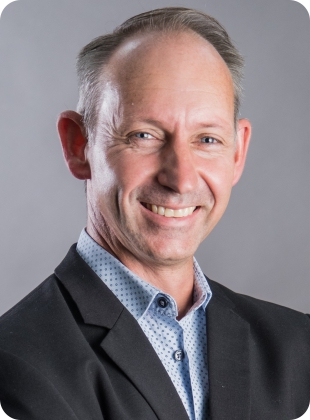
Prof Gerhard Prinsloo
MSA BoD Member
Gerhard Prinsloo started his undergraduate studies at the University of Pretoria in 1997 enrolling for a BSc in botany. He obtained his BSc in 1999, BSc (Hons) in 2001, MSc (cum laude) in 2003 and PhD (Plant Physiology) in 2007 with a focus on phytomedicine. He joined the Agricultural Research Council (ARC)-Vegetable and Ornamental Plant Institute (VOPI) Medicinal Plant Incubator in 2006 as a researcher and was promoted to senior researcher in 2007. There he established the medicinal plant research programme for cultivation of South African medicinal plants, drawing generous external funding and now one of the major research programmes of the ARC. He joined the University of South Africa in 2011 as a senior lecturer in the Department of Agriculture and Animal Health where he was promoted to Associate Professor in 2018 and Full Professor in 2021. He has published more than 75 papers in the field of plant secondary metabolism and plant metabolomics in various high impact international journals and received more than R15 million in external funding in his research career since 2007. He is the recipient of various grants and awards including the Million and a half Rand club award in 2020 and the Chancellors Award for Excellence in Research in 2021.He serves regularly as external examiner for MSc and PhD students and has been invited to serve on various expert reviewer panels. He also successfully supervised 14 MSc and 11 PhD students to completion with a number of students currently under his supervision. He is leading the Indigenous Plant Research group and established NMR-based plant metabolomics at UNISA, currently well established and recognized, presenting regular workshops and training sessions.
Prof Saheed Sabiu
MSA BoD Member
Saheed Sabiu is a Professor in the department of Biotechnology and Food Science, Durban University of Technology. He established, and leads the Computational and Systems Biology Research Group, where postgraduate students and emerging researchers are being trained and mentored on bioprospecting new small molecule targets against degenerative diseases. Specifically, the Group profiles plant secondary metabolites against microbial infections and diabetes using computational and experimental validation approaches, building a library of metabolites of therapeutic significance. His projects have attracted funding from the International Centre for Genetic Engineering and Biotechnology (ICGEB), National Research Foundation (NRF), Technology Innovation Agency (TIA), South African-Sweden University Forum (SASUF), and the South African Medical Research Council (MRC). Through his funded projects, he is significantly contributing to scholarly discourse, as evident from his over 80 scholarly publications in accredited journals and significant citations with h-Index of 26. Prof. Sabiu is actively reviewing for more than 20 journals in his field and serving as an Academic Editor in six international journals. Besides being NRF C1 rated, Prof. Sabiu is an alumnus of the Future Professors Program of the Department of Higher Education and Training (DHET) and a member of the Africa Centres for Disease Control and Prevention (CDC) Focus Group on Vaccine Preventable Diseases (VPD). In 2024, he was announced as a finalist nominee for the National Science and Technology Forum (NSTF) awards. Prof. Sabiu has been instrumental to several scientific programmes that culminated in capacity building of young scholars. Since 2020, he has been organizing computational and systems biology workshops and the most recent was organized earlier this year and was well-attended with several national delegates and stakeholders in the field of metabolomics and computational and systems biology.
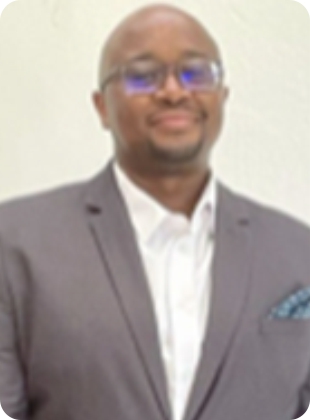
Mr Molati Nonyane
MSA BoD Member
Molati Nonyane is a seasoned biotechnology professional with expertise in promoting collaborative networks and advancing Biotechnology through "omics" technologies. As Programme Manager at the African Centre for Gene Technologies (ACGT), he drives capacity building, fundraising, and stakeholder engagement in genomics, epigenomics, transcriptomics, proteomics, and metabolomics. Mr Nonyane holds qualifications in Biotechnology, Microbiology, Molecular and Cell Biology, Project Management and Public Health. Prior to joining ACGT, Mr. Nonyane spent 7 years as a researcher in HIV and virology at the National Institute for Communicable Diseases (NICD). He co-authored numerous publications in top-tier journals on viral evolution, escape mutations, and monoclonal antibodies lineages. For over 8 years in this current role at the ACGT, Mr Nonyane has applied holistic approaches to make meaningful impact leveraging “omics” information for evidence-based programmes and policies. He also sits on the Board of Directors for Metabolomics South Africa (MSA) and sits on numerous subcommittees within MSA as a key contributor in the continued operation of the association since its establishment in 2018 in which he played a key role. He is also in the DIPLOMICS Proteomics and Metabolomics Advisory Group (PMAG). His main interests are in public health, policy development and programme implementation specifically, promoting collaborative partnerships, benefits realization and enhancing efficient routes to collaborative translational research.
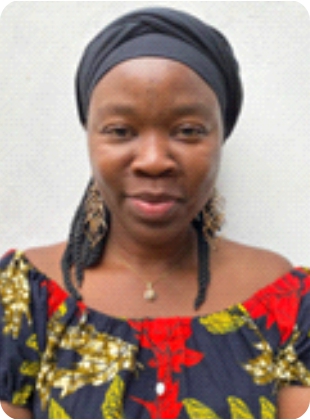
Dr Claude Yasmine Hamany Djande
MSA Early Career Committee
Claude Yasmine Hamany Djande is a passionate biochemist and postdoctoral researcher at the University of Johannesburg, working at the dynamic intersection of chemical biology and metabolomics. Her research is driven by a critical question: how can we unlock the innate resilience of cereal crops in an era of climate change? With a strong foundation in pharmacology and biochemistry, Dr. Hamany Djande applies advanced LC-MS platforms and computational metabolomics to decode metabolic reprogramming in plants under environmental stress. Her work identifies key biochemical markers of resilience, harnesses plants as sustainable bioreactors for valuable natural compounds, and inspires new frameworks for understanding metabolic adaptation. Her current research extends to exploring metabolic transitions in germlings and seedlings, offering new insights into early developmental metabolism and its potential for improved crop protection and productivity. She has authored several peer-reviewed publications and presented her work at major international conferences, including the Metabolomics Society meetings in Japan (2024) and Prague (2025). A creative communicator and mentor, she serves as an active member of the Metabolomics South Africa Early career Committee (MSA-EC), where she leads communication and outreach initiatives. Driven by the belief that science can be both rigorous and deeply human, Dr. Hamany Djande founded CYHD’s Notes - Seed for Inspirations and Hope, a reflective space that weaves curiosity, creativity, and purpose into the scientific journey. Through her research and mentorship, she aims to empower African scientists to transform the continent’s rich biodiversity into a cornerstone of global resilience, sustainability, and food security.