
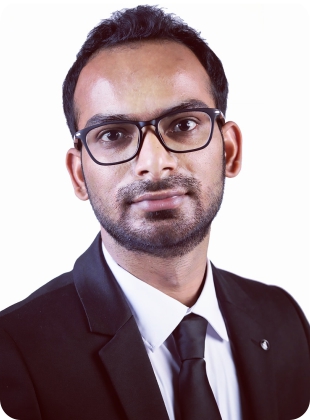
Dr Faraat Ali (Zimbabwe)
Faraat Ali presently working as a Senior Scientist Mass Spectrometry, at AIBST, Zimbabwe. Dr. Ali is a drug discovery Scientist and completed PhD in Pharmaceutical and Medicinal Chemistry from faculty of Pharmacy at Hradec Kralove, Czech Republic. He has over 12 years of rich and varied experience in Pharmacometabolomics, Metabolite identification and preclinical research, working on various positions in top ranking pharmaceutical industries and Health Authorities (including Teva API India Ltd, Akums Drugs and Pharmaceuticals Ltd.), Botswana Medicines Regulatory Authority, Botswana, and standard drug regulatory setting of India, Indian Pharmacopoeia Commission (IPC), Ministry of Health and Family Welfare, Government of India. He initiated his career as Research Trainee in Teva API India Limited, Gajraula, India. He has published more than 75 scientific publications/book chapter in various national and international journals to his credit. Ali is a member of World Health Organization-National Control Laboratory (WHO-NCL) Network for Biologicals & Vaccines, Metabolomics Society, Regulatory Affairs Professional Society (RAPS) USA, and American Association of Pharmaceutical Scientists (AAPS) and life member of IPGA.
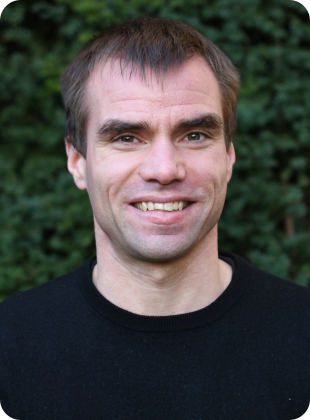
Prof Wout Bittremieux (Belgium)
Prof. Dr. Wout Bittremieux is an internationally recognized researcher in computational metabolomics and mass spectrometry–based data analysis. His work focuses on developing AI-driven methods for molecular discovery from untargeted mass spectrometry data, enabling scalable annotation and biological insight across large metabolomics datasets. He has created multiple machine learning tools for spectral similarity learning, analog discovery, and data-driven molecular characterization. In parallel, he actively contributes to community standards and leadership efforts shaping the future of computational mass spectrometry and metabolomics.
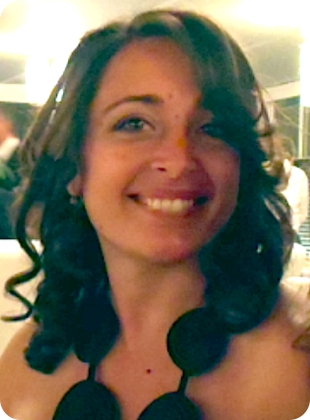
Prof Tiziana Cappello (Italy)
Tiziana Cappello is Associate Professor at the University of Messina, Italy. Her research activity focuses on ecocytotoxicology and biomonitoring of aquatic environments to elucidate the impact of metals, POPs, PAHs, pharmaceuticals and emerging contaminants such as microplastics and nanoparticles on invertebrates and fish. She is expert in protonic Nuclear Magnetic Resonance (1H NMR)-based metabolomics, useful to comprehensively assess the health status of organisms, combined with chemometrics and conventional tools (histology, immunohistochemistry, molecular and enzymatic approaches) to gain more complete insights into biota adaptive and defence mechanisms at cellular level under stress conditions, including climate changes.
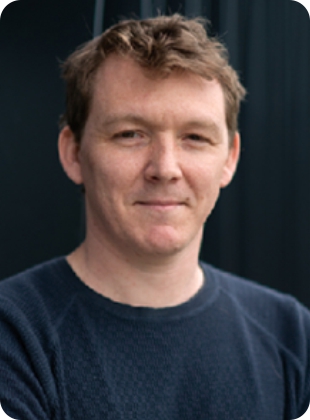
Prof Bart Ghesquiẻre (Belgium)
Bart Ghesquière is a Full Professor at KU Leuven and head of the Laboratory of Applied Mass Spectrometry (LAMaS), the VIB Metabolomics Core Leuven and the KU Leuven Proteomics Core. He is a leading expert in mass spectrometry–based multi-omics, with research spanning proteomics, metabolomics, lipidomics, spatial metabolomics imaging, and stable-isotope tracer approaches. His group develops and applies high-resolution analytical pipelines to map metabolic regulation in complex biological systems, including immune responses, cancer, rare metabolic disorders, and organ-to-organ communication in disease. A major focus of his work is the creation of next-generation infrastructure for single-cell and organelle-resolved multi-omics, bridging cell biology, imaging, flow cytometry, and computational integration. Prof. Ghesquière plays a central role in large collaborative consortia and technology platforms across Belgium and Europe, driving innovation that empowers both fundamental discovery and translational applications.
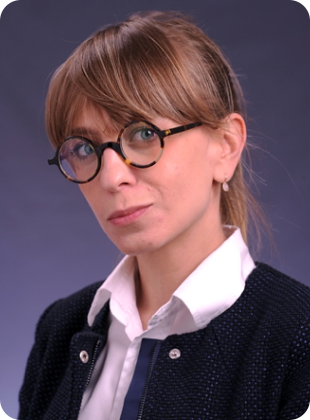
Dr Anna Halama (Qatar)
Anna (Ania) Halama, PhD is an Assistant Professor of Research in Physiology and Biophysics at Weill Cornell Medicine–Qatar (WCM-Q). She leads a research program focused on cancer metabolism and multi-omics integration, with emphasis on breast and lung cancer. Her work applies metabolomics, proteomics, and genomic approaches to define metabolic vulnerabilities and mechanisms driving cancer progression. Dr. Halama is deeply involved in medical education and student mentorship, incorporating advanced omics technologies into research training for medical students. Her efforts aim to bridge molecular insights with clinical relevance while fostering the development of future physician-scientists.
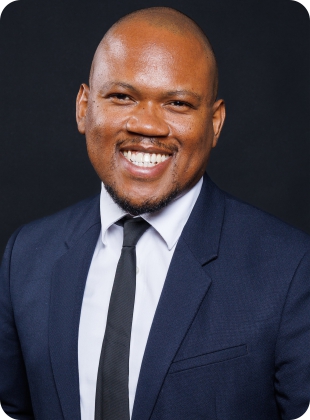
Prof Thulani Makhalanyane
Thulani Makhalanyane is a Professor in the Department of Microbiology and the School for Data Science and Computational Thinking at Stellenbosch University. He also holds a SARChI Chair in African Microbiome Innovation at Stellenbosch University. He earned his PhD from the University of the Western Cape in 2013, and his research focuses on understanding the ecology and evolution of microbial communities. He has co-authored over 150 publications in leading journals, including Nature, Science, PNAS, and The ISME Journal. Thulani serves on several editorial boards and is currently Editor-in-Chief for Reviews and Perspectives at The ISME Journal, as well as Senior Editor at mSystems. He also serves on national and international panels, representing South Africa in bilateral scientific discussions. He received the prestigious National Research Foundation (NRF) P-rating in 2019 and was recently awarded an NRF B-rating.