
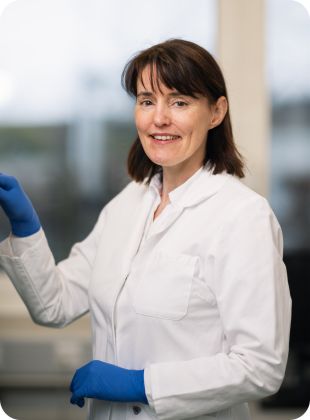
Prof Jennifer Kirwan
Prof. Kirwan started her career as a clinical veterinarian where she became increasingly interested in translational and evidence based medicine before undertaking a PhD in metabolomics. In 2025, she moved to set up Metabolomics at University of Veterinary Medicine, Vienna, Austria where she will focus on veterinary metabolomics. She also leads the Berlin Institute of Health Metabolomics at Charité University Hospital in Berlin, where she focuses on translational health-related metabolomics, especially on its quality management aspects. She is particularly interested in the gut-brain-heart health triad and how the microbiome influences health. She is a founding member of the German Metabolomics Society, a former Coordinating Committee Chair of the international Metabolomics quality assurance and quality control consortium (MQACC) and is an active member of the Precision Medicine and Pharmacogenomics working group of the International Metabolomics Society, and of the Diagnostics group in BIODeutschland.

Prof Edwin Madala
Ntakadzeni Edwin Madala is an Associate Professor of Biochemistry at the University of Venda and the principal investigator (PI) at the newly established Centre of Excellence in Mass Spectrometry for Southern Africa (CEMSA). This initiative has positioned the University of Venda as the only historically disadvantaged university in South Africa actively advancing research in the highly specialised field of mass spectrometry. His research integrates computational metabolomics and chemometric modelling to investigate nutraceutical compounds from under-utilised plants, with particular emphasis on the phytochemistry of Moringa and other health-promoting species. He is especially interested in understanding how plants diversify their chemical repertoires to adapt to the harsh environmental conditions characteristic of African landscapes. Through this work, he develops advanced analytical methodologies that uncover chemical complexity and explore the potential of isomeric compounds as health-promoting agents. Edwin obtained his PhD from the University of Johannesburg under the Next Generation Scholarship and was awarded the National Research Foundation (NRF) Emerging Researcher of the Year in 2019. He has recently received a C1 rating from the NRF of South Africa and is also an Iso Lomso Fellow at the Stellenbosch Institute for Advanced Study. With over 130 peer-reviewed publications and extensive international collaborations spanning Germany, Egypt, Japan, the United States, and the United Kingdom, he has co-supervised numerous master’s and doctoral students and is widely recognised for his significant contributions to biochemistry, food chemistry, and analytical sciences.

Prof Carina Mels
Professor Carina Mels is a Research Professor and Director of the Hypertension in Africa Research Team (HART) at North-West University, South Africa. She is an established researcher with more than 100 peer-reviewed publications and extensive experience in supervising postgraduate students, many of whom have been trained in metabolomics-driven cardiovascular research. Two of her students have received the Vice-Chancellor’s Medal for the most outstanding master’s student in the Faculty of Health Sciences. She holds a C2 rating from the South African National Research Foundation and is the local Principal Investigator of two major longitudinal cohort studies—African-PREDICT and PRECEED-Africa. These studies provide a powerful platform for large-scale metabolomics and multi-omics research aimed at uncovering early molecular changes that precede hypertension and cardiovascular disease, particularly in African populations. With a background in biochemistry and physiology, Prof. Mels integrates metabolomics and proteomics with detailed clinical phenotyping to identify metabolic pathways and biomarkers associated with early cardiovascular dysfunction. Her research focuses on molecular discovery, leveraging metabolomics to identify early disease-associated pathways, with a strategic emphasis on translating these findings toward preclinical detection and precision prevention of cardiometabolic disease. Prof. Mels is actively involved in national and international research leadership and capacity development, serves on the Editorial Board of Metabolomics, and contributes to professional societies dedicated to reducing the global burden of hypertension. Through her research, mentorship, and leadership, she continues to advance the role of metabolomics in understanding disease mechanisms and shaping the future of cardiovascular prevention in Africa and beyond.
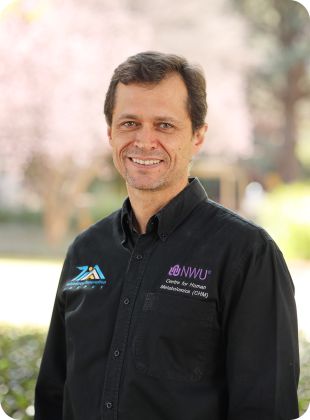
Prof Chris Vorster
Prof. Chris Vorster is a chemical pathologist and Director of the Centre for Human Metabolomics at North-West University, South Africa. He is a recognised leader in the application of metabolomics to clinical diagnostics, rare disease research, and precision medicine across Africa. He has played a central role in establishing the South African National Metabolomics Platform and in expanding access to advanced metabolic diagnostic services, including newborn screening and specialised biochemical testing for inherited metabolic diseases. He leads the Nngwe Programme and is actively involved in the development of a South African Rare Diseases Biobank to support cross-institutional collaboration, data sharing, and capacity building. His work emphasises the generation of African-relevant multi-omics data and the integration of metabolomics with genomics and other technologies to improve diagnostic yield, variant interpretation, and clinical decision-making in resource-constrained health systems.
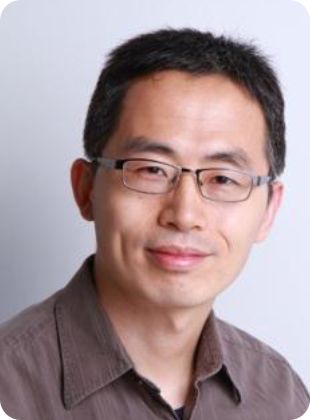
Prof Jeff Xia
Dr. Xia is a Professor and Canada Research Chair in Bioinformatics and Big Data Analytics at McGill University, with appointments in the Department of Microbiology & Immunology and the Institute of Parasitology. His research develops innovative, practical approaches to big data challenges in biomedical and environmental sciences, with emphasis on metabolomics, microbiomics, exposomics, and multi-omics integration. His group is building next-generation computational frameworks that combine big data infrastructure, machine learning, and visual analytics to extract meaningful insights from complex omics datasets. Dr. Xia has authored over 130 journal publications and 9 book chapters, with more than 50,000 citations and an H-index of 63. He received the 2019 McGill Principal’s Prize for Outstanding Emerging Researchers and has been recognized as a Global Highly Cited Researcher by Web of Science since 2019.